
An Apple a Day, an Idea a Day
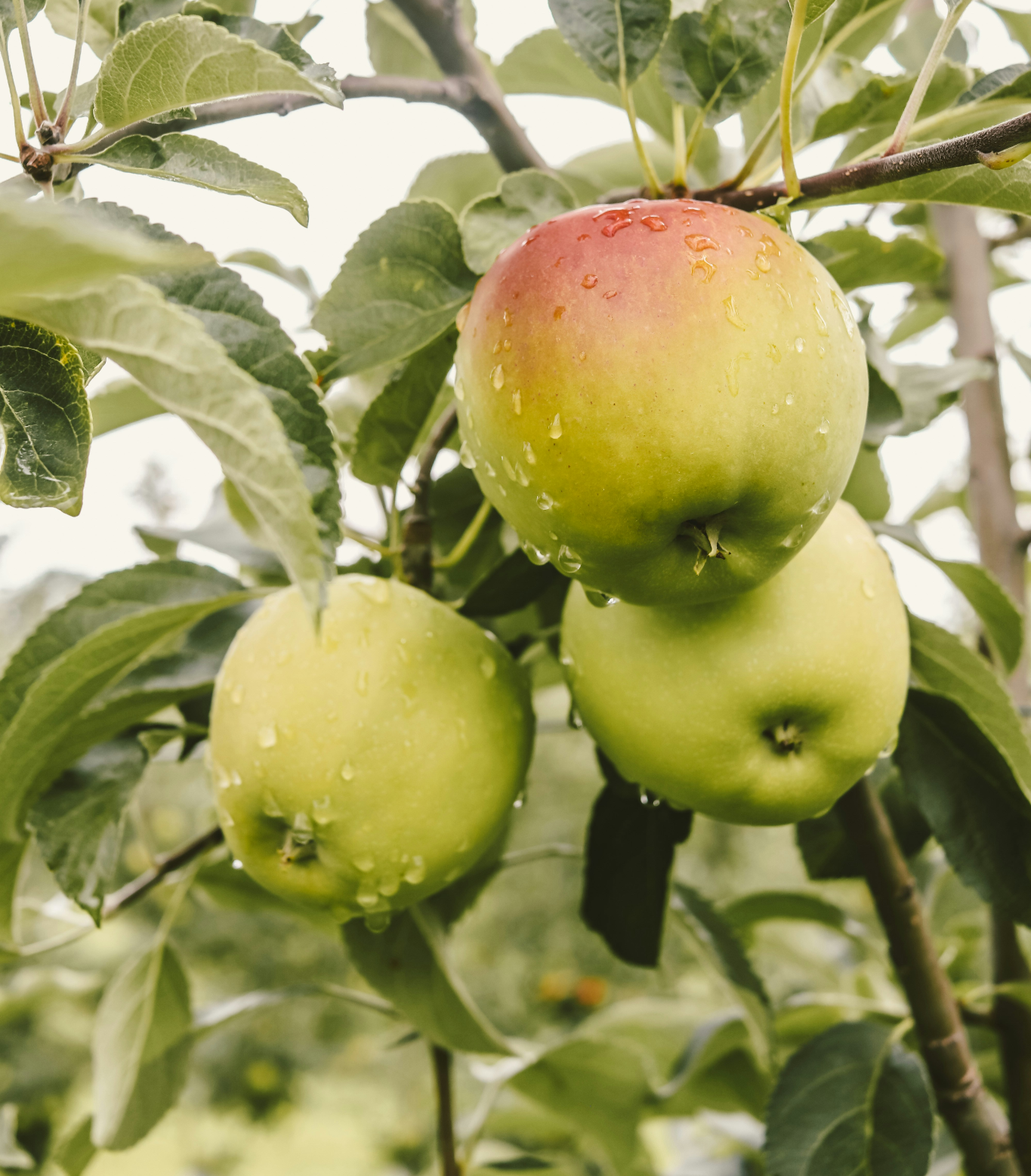
“It is the very nature of an idea to grow.” — Charlotte Mason
September is the beginning of many things: a new school year, the first hints of fall, and, here in Virginia, apple season.
I got back into eating apples a few months ago. Plain, with the skin on, simple-to-eat apples. My go-to has always been Granny Smith, but I’ll eat almost any variety as long as it is crisp. I do not favor a mealy apple. Those are good for baking, perhaps, but not for snacking—at least not for me.
My dad took an apple to work every day. I remember seeing it in his lunchbox. It was a deep red apple, taller than the apples I see in the store today. I wonder now what variety it was. And I’m pretty sure it was the same apple that traveled to and from work, day after day, never to be eaten.
During my growing-up years, my grandfather grew the best apples in his Arlington backyard—Rambos. They were massive green apples, wonderfully crisp and tart, and I could hardly wait each year to have one.
Apples, of course, have long had a reputation for being good for us. An apple a day keeps the doctor away, they say. So I’m back to having an apple most days. As far as fruit goes, they are easygoing. Grab one out of the refrigerator, wash it, wrap it in a cloth napkin, throw it in the lunchbox, and off you go.
Charlotte Mason had something to say about what we need each day—not an apple, but an idea.
She wrote, “It is not too much to say that a morning in which a child receives no new idea is a morning wasted, however closely the little student has been kept at his books.” Ideas, Mason contends, provide nourishment for the mind, just as food provides nourishment for the body. But there is something remarkable about the nourishment of an idea: an idea, once planted in the mind, can produce a harvest.
“It is the very nature of an idea to grow: as the vegetable germ secretes that it lives by, so, fairly implant an idea in the child's mind, and it will secrete its own food, grow, and bear fruit in the form of a succession of kindred ideas.”
This is one of the reasons we care so deeply about what we put before our students each day. We want them to encounter more than information to remember or assignments to complete. We want to spread a feast of living ideas before them—ideas found in great books, beautiful language, mathematics, history, science, music, art, nature, and, above all, the truth of God’s Word.
And then we give those ideas room to do their work.
We do not always know which ideas will take root. A line from a poem may lie quietly in a child’s mind for years. A moment in history may awaken a lifelong interest. An observation made on a nature walk may grow into wonder at the order of creation. A story of courage or sacrifice may return at precisely the moment when courage or sacrifice is required.
There is something mysterious and hopeful about that. We plant and tend, but much of the growing happens beyond our sight.
Perhaps that is why I still remember those apples from my grandfather’s backyard. Many years after I’d eaten my last one from his tree, I came across a Rambo at a farmers market in Alexandria. That first bite took me right back. Something I had loved in childhood, seemingly long gone, was suddenly present again.
I wonder if ideas can be like that, too.
We are still in the early days of our year together, and there is a great deal of growing ahead. As our students settle into the rhythms of their days—their books, lessons, habits, friendships, and responsibilities—I hope we will remember that we are not merely trying to fill their days. We are nourishing minds and souls.
An apple a day is probably still a good idea.
But even better: may every child in our care encounter an idea worth carrying home.